
Scam alert: Smishing text scams
The rise of Department for Work and Pensions (DWP) text scams
As fraudsters continue to evolve their tactics, one method gaining momentum is smishing – a form of phishing that uses SMS text messages to deceive victims. A growing concern within this space is DWP-related scams, where fraudsters impersonate the DWP to exploit vulnerable individuals.
What is smishing?
Smishing is short for SMS phishing. It’s a scam where fraudsters send text messages designed to trick recipients into clicking malicious links, sharing sensitive information or making payments.
Unlike email phishing, smishing exploits the trust and immediacy of mobile communication. We have seen a sharp rise in smishing scams in 2025, particularly those impersonating the DWP.
How does the scam work?
Scammers are exploiting public trust in the DWP by sending fraudulent texts related to:
- Winter fuel payments
- Energy support grants
- Cost of living payments
These scams are designed to look official, often mimicking DWP branding and tone. While they frequently target individuals who may be receiving benefits, such as pensioners, disabled claimants or those on low incomes, they are sent using mass-texting tools and can affect anyone.
Real examples from 2025
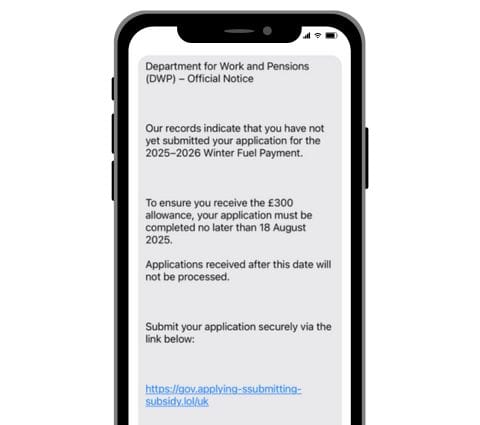
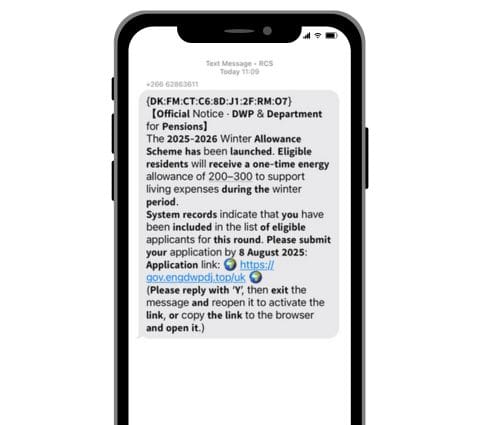
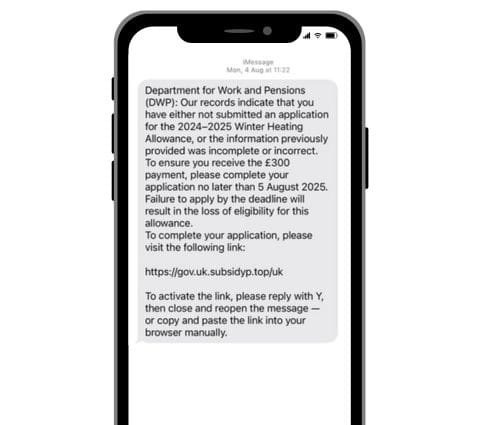
Common red flags
Watch out for:
- Text messages from unknown or suspicious numbers
- Urgent language pressuring immediate action
- Messages sent to multiple recipients
- Links that don’t match official government domains
How to stay safe
To best protect yourself and others, follow these key tips:
- Be sceptical of unexpected texts: DWP will rarely contact you via SMS with urgent requests. If a message seems out of the blue or overly urgent, treat it with caution.
- Check the source: Did it come from a trusted contact or company? If in doubt, contact the company directly using a known phone number or website, not through links in the message.
- Don’t click on links in texts: Instead, go directly to the official DWP website or use a trusted app to check your account.
- Report suspicious messages: Forward smishing texts to 7726 (a free spam-reporting service supported by UK mobile networks). You can also report incidents to Action Fraud. Additionally, use your phone’s built-in tools to block and report the sender.